
The Roses Never Stopped
What a good marriage can hide, and what it took me thirty years to ask underneath it


Sunday morning, coffee still hot, my husband is already looking for his shoes.
“I’ll go get bread,” he says.
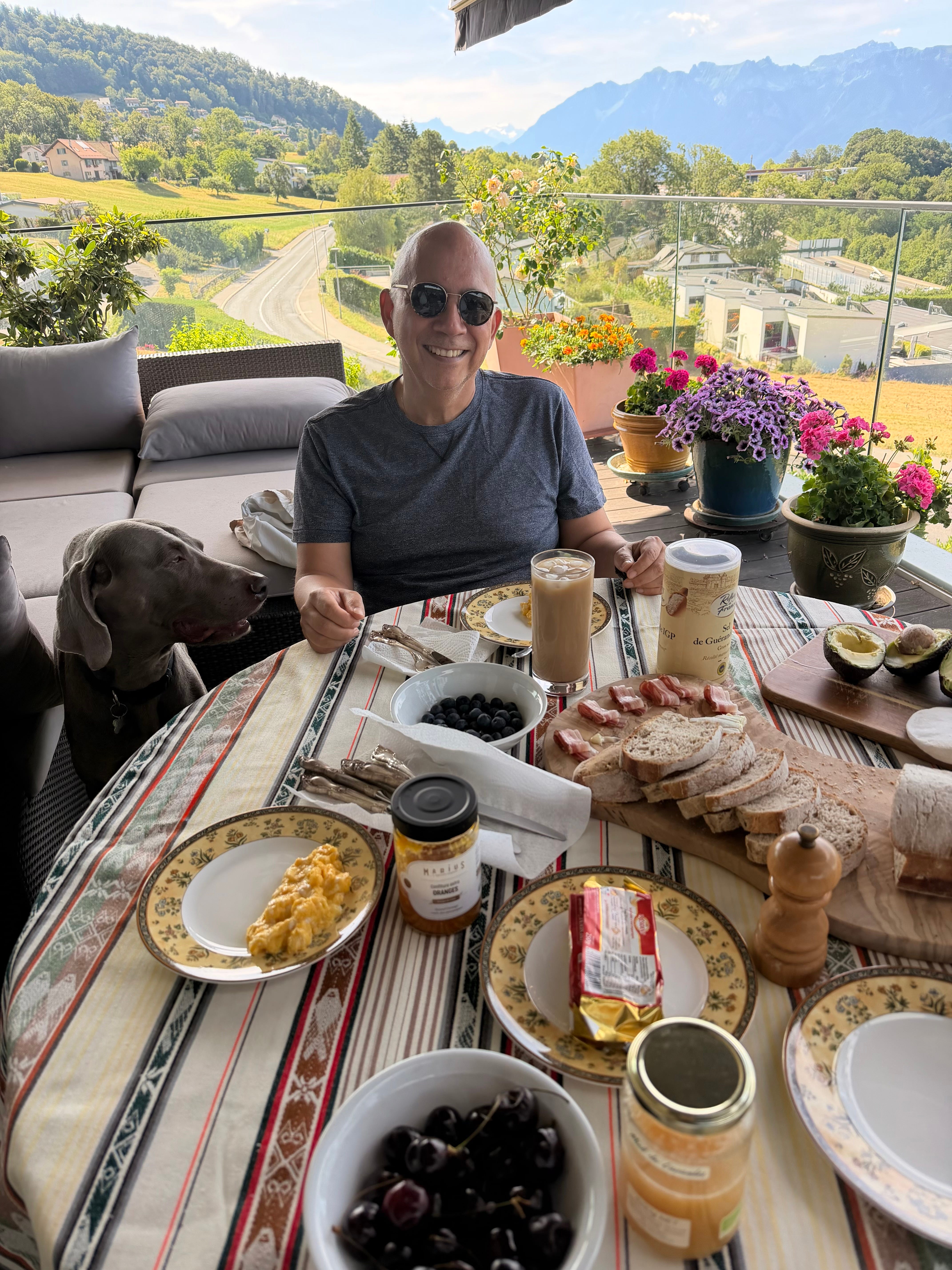
Nothing wrong with this, he has said some version of this sentence every Sunday for years. Ever since moving to Switzerland we have enjoyed long slow breakfast, bread still warm from the bakery, cheeses, fruits and lots of coffee. It is a beautiful ritual.. It is also, I realized this morning, a ritual. Which means at some point it stopped being a choice and started being a reflex.
He does this with many things in our life. I have received long stem roses since I was twenty-seven years old. Birthdays, anniversaries, whatever else the calendar hands him. He asks how I slept most mornings, and I give him the short answer, and he nods, and we move on. None of this is wrong. All of it is lovely, actually. But lovely and alive are not the same thing, and I have only recently learned to tell the difference.
The problem with autopilot is that from the outside it looks like a good marriage. We don’t argue much. We have our rituals. Anyone watching us would see the roses, the bread, the question about sleep, and conclude we have a good marriage. And in a way we do, the way a house is fine right up until you notice the foundation has been quietly settling for years.
Underneath the rituals, we were drifting. Resentment I never said out loud. Giving too much and then feeling bitter about giving too much, which is its own private kind of madness. A habit of disappearing from my own needs so completely that I forgot I had them. And under all of it, something I am almost embarrassed to name. A feeling, ancient and stubborn, that I was not entirely worthy of asking for more than I was already getting.
We did not talk about any of this, partly pride, partly not knowing how. You can spend thirty years getting very good at rituals and never once learn how to say I am hurting and I don’t think you see it.
This is where most marriages end. Not in the resentment itself, resentment alone rarely kills anything. They end at the mountain. You look at everything that has gone unsaid for years, the giving, the pride, the silence, the small ways you each abandoned yourselves to keep the peace, and the mountain looks too large to move. So people stop trying, not because they stopped loving each other, but because moving a mountain feels impossible and staying in a beautiful, autopilot house feels so much easier.
We are moving ours, very slowly, one boulder at a time, not the whole mountain at once, because the whole mountain will crush you if you look at it directly. Some weeks the boulder is a single honest sentence. Some weeks it’s just noticing the autopilot and saying so out loud, the way I did this morning over coffee.
I want to say one more thing in defense of autopilot, because it isn’t only the villain of this essay. There is real comfort in it. In a world that offers no guarantees of anything, there is something steadying about a home where the same small rituals repeat themselves for three decades. The roses arriving. The bread on Sunday. The question about sleep, asked without fail. That predictability is not nothing. It is, in its own way, a form of safety, and safety is not something to be ashamed of wanting.
The work, I think, is not to tear the rituals down. It’s to stop hiding inside them. To keep the bread and the roses and ask, underneath all that comfort, whether two people are still actually there.
He is back now, bread in hand, and the kitchen smells like it always does on a Sunday. I am still working out how to want both things at once. The safety of the ritual, and the risk of finally looking underneath it.

This is so honest and vulnerable. Having the courage to question the way things are is already a win.
Your honesty heals. As it happens this is exactly what I have been thinking about this morning. The house, and the foundation. Wanting a house AND a stronger foundation. Like so many joint projects, one looks at the foundation and says, "those cracks, they worry me. I swear the house isn't settling properly and that is going to affect so many things upstairs. Can we fix them before they get worse?" The other says, "it's fine, it's expensive to fix" (and secretly says to self: "I don't know the first thing about fixing them; this whole conversation makes me nervous."). That unresolved tension. It can be so hard to live with ... and as usual, you name it so well.